Florida Foot & Ankle Group strives to provide our patients the highest quality foot and ankle care. From comprehensive diagnostics to a wide range of podiatric services from routine to advanced, our goal is to pinpoint the underlying cause of your condition and treat it successfully.
At Florida Foot & Ankle Group, podiatrists Lisa N. Alaish, DPM, Walter E. Roth, DPM, Cindy M. Watson, DPM, and Laura Walton, DPM are dedicated to providing patients with comprehensive medical and surgical care of the foot and ankle. We understand the importance of quality podiatric services in a convenient and comfortable environment and therefore gladly see patients at 3 offices located in DeBary, Lake Mary, and Orlando, FL. While our foot doctors treat a wide variety of foot and ankle concerns, they specialize primarily in forefoot conditions as well as ingrown toenails, plantar fasciitis, diabetic foot care, plantar warts, bunions, and hammertoes.
Florida Foot & Ankle Group accepts most insurance plans and welcomes new patients. Our offices have easily accessible, private parking. We speak English, Arabic and Spanish. If you have any questions or would like to schedule an appointment, please call one of our 4 offices today!
DeBary: (386) 668-2663 Dr. Roth, Dr. Watson, and Dr. Walton
Lake Mary: (407) 323-2566 Dr. Roth, Dr. Watson, and Dr. Walton
Orlando: (407) 281-1414 Dr. Alaish
Summary: Final Rule Implementing Section 1557 of the Affordable Care Act
The Department of Health and Human Services (HHS) issued the Final Rule implementing the prohibition of discrimination under Section 1557 of the Affordable Care Act (ACA) of 2010. The Final Rule, Nondiscrimination in Health Programs and Activities, will help to advance equity and reduce health disparities by protecting some of the populations that have been most vulnerable to discrimination in the health care context. The final rule explains consumers’ rights under the law and provides covered entities important guidance about their obligations.
Section 1557 prohibits discrimination based on race, color, national origin, sex, age or disability in certain health programs and activities.
Section 1557 builds on long-standing and familiar Federal civil rights laws: Title VI of the Civil Rights Act of 1964 (Title VI), Title IX of the Education Amendments of 1972 (Title IX), Section 504 of the Rehabilitation Act of 1973 (Section 504), and the Age Discrimination Act of 1975 (Age Act). Most notably, Section 1557 is the first Federal civil rights law to prohibit discrimination on the basis of sex in all health programs and activities receiving Federal financial assistance.
Section 1557 has been in effect since enactment of the ACA in 2010 and the HHS Office for Civil Rights (OCR) has been enforcing the provision since it was enacted.
Coverage of the Rule
The rule covers:
− Any health program or activity, any part of which receives funding from HHS (such as hospitals that accept Medicare or doctors who accept Medicaid);
− Any health program that HHS itself administers;
− Health Insurance Marketplaces and issuers that participate in those Marketplaces.
Attention: If you speak any of the listed below languages – language assistance services, free of charge, are available to you.
Please call: State Health Insurance Assistance Program Language Line 800-792-8820
| |
|
| 1 | Spanish |
| 2 | Chinese |
| 3 | Korean |
| 4 | Portuguese |
| 5 | Gujarati |
| 6 | Polish |
| 7 | Italian |
| 8 | Arabic |
| 9 | Tagalog |
| 10 | Russian |
| 11 | French Creole |
| 12 | Hindi |
| 13 | Vietnamese |
| 14 | French |
| 15 | Urdu |

Heel pain is most commonly caused by repetitive stress. With that being said, it may be more common for athletes who perform repetitive movements to be afflicted with heel pain at some point during their activity. Heel pain can occur due to a number of different factors. These may include issues with having poor circulation, complications due to arthritis and diabetes, and poor form when running or exercising, as well as having poor posture.
There are a number of conditions that may also influence pain felt in the heel region. Tarsal tunnel syndrome is one example of a condition that affects the heel. This may occur when the nerve in the back of the foot becomes pinched, thus causing a numbing or tingling feeling as if the heel has pins and needles in them. Heel bursitis is another condition that commonly brings discomfort to the heel. This condition may arise when inflammation occurs at the back of the heel, often occurring due to landing awkwardly or wearing footwear that puts a good amount of pressure on the heel. As a result, the Achilles tendon may swell, causing the pain to increase throughout the day. Simple exercises focused on strengthening the heel and surrounding areas, as well as focused on building the flexibility of the foot, may help to prevent and treat heel pain.
For a proper diagnosis and advised professional treatment plan, we recommend that you consult with a podiatrist as soon as possible to avoid developing a serious condition.

Foot and ankle surgery may be performed depending on the severity of the injury. In any case, if you happen to develop a foot condition, it’s always advised you seek the counsel of a podiatrist for a proper diagnosis and advised treatment plan. If you notice an abnormal growth, a change in the appearance of your foot or ankle, discomfort while standing or walking, or general foot pain, it would be in your best interest to seek professional help, especially if surgery is the recommended treatment for your case.
Podiatrists perform foot and ankle surgery to treat a number of different conditions. These may include bunions, heel pain, flat feet, arthritis of the foot or ankle, sports injuries, hammertoes, ingrown toenails, complications due to diabetes, and fractures, to name a few. Again, the need for surgery is dependent upon the type of injury you are experiencing, as well as its severity. This also means that the recovery process for surgery will vary as well. With that being said, most podiatrists will recommend you get plenty of rest, stay off your feet, ice the affected area to reduce swelling, and elevate the affected area.
If you believe you have a foot or ankle injury that may require surgery, it’s highly recommended that you speak with a podiatrist as soon as possible to go over the best treatment option for your condition.
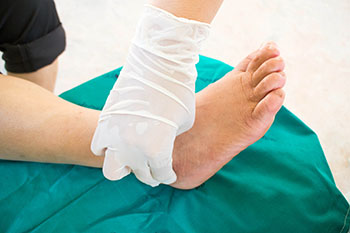
For those with diabetes, early prevention and prompt treatment for wounds can be crucial to maintaining healthy feet. Unfortunately for those with diabetes, minor wounds have the ability to turn into serious ulcers if left uncared for. Simply walking in new or tight-fitting shoes can be enough to form a serious foot condition. Diabetes affects the nerves of the feet, sometimes leaving them with little or no feeling. If a wound therefore develops and isn’t felt, it may be hard for that person to recognize they need care.
To avoid ignoring wounds and to help prevent the development of serious foot conditions, it’s advised to check your feet daily for any abnormalities. It can also be beneficial to wear comfortable shoes with extra support. Avoiding high heels and other tight-fitting shoes may help in preventing certain foot complications. You should also be careful in how you trim your toenails. Avoid cutting at an angle and digging into the sides of skin surrounding the nail. Lastly, be sure to wash and dry your feet thoroughly to maintain proper hygiene for your feet.
For information on wound care and wound prevention, we recommend you speak with a podiatrist for professional care and advice.
Connect With Us







 Rate Us