Florida Foot & Ankle Group strives to provide our patients the highest quality foot and ankle care. From comprehensive diagnostics to a wide range of podiatric services from routine to advanced, our goal is to pinpoint the underlying cause of your condition and treat it successfully.
At Florida Foot & Ankle Group, podiatrists Lisa N. Alaish, DPM, Walter E. Roth, DPM, Cindy M. Watson, DPM, and Laura Walton, DPM are dedicated to providing patients with comprehensive medical and surgical care of the foot and ankle. We understand the importance of quality podiatric services in a convenient and comfortable environment and therefore gladly see patients at 3 offices located in DeBary, Lake Mary, and Orlando, FL. While our foot doctors treat a wide variety of foot and ankle concerns, they specialize primarily in forefoot conditions as well as ingrown toenails, plantar fasciitis, diabetic foot care, plantar warts, bunions, and hammertoes.
Florida Foot & Ankle Group accepts most insurance plans and welcomes new patients. Our offices have easily accessible, private parking. We speak English, Arabic and Spanish. If you have any questions or would like to schedule an appointment, please call one of our 4 offices today!
DeBary: (386) 668-2663 Dr. Roth, Dr. Watson, and Dr. Walton
Lake Mary: (407) 323-2566 Dr. Roth, Dr. Watson, and Dr. Walton
Orlando: (407) 281-1414 Dr. Alaish
If you happen to wear tight fitting shoes or tend to stand for the majority of your day, it’s likely that you may develop a foot condition known as a corn. When frequent friction or pressure is put on the foot, a small, hardened lump may form in that area. A corn may have a yellow hue and can typically be found on the side of the toes, as well as on the bottom of the feet. Though they are generally harmless, corns can often bring many patients discomfort.
To help prevent yourself from developing a corn, it’s important to wear shoes that give your toes enough room to comfortably move around. Some patients may also find it useful to soak the feet with warm water, pat them dry, and apply a moisturizer. After practicing these steps over a period of time, the corn will most likely soften. Your podiatrist may choose to file the corn down.
For more information and professional removal of your corn, we recommend you consult with a podiatrist for an advised treatment plan.
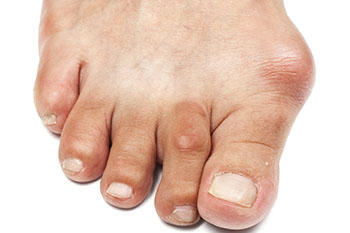
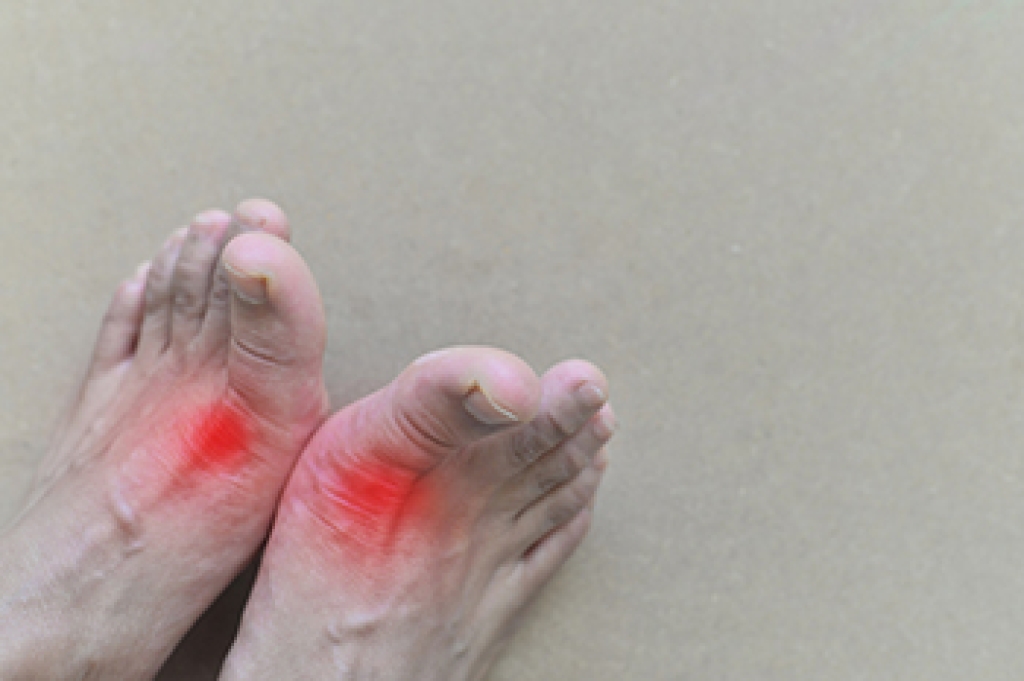
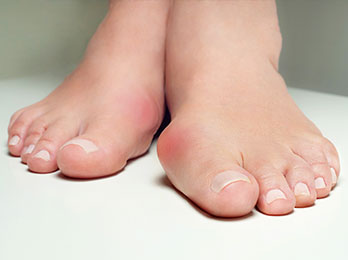
If you have arthritis, frequently wear tight fitting shoes such as high heels, and are older in age, it’s very likely that you may develop a bunion. A bony hump at the base of the big toe is the biggest sign that you may have developed this condition. Bunions are often painful and typically cause an extreme amount of discomfort. Because a bunion protrudes on the side of the foot, it’s likely for it to continuously rub against the inside of your shoe. This causes frequent friction and pain, which may cause calluses to form as well.
There are a number of ways to help alleviate discomfort if you’re experiencing pain due to having a bunion. To begin, it’s important that you maintain a healthy body weight in order to lessen the pressure put on your feet. Icing and warming the affected area may also help ease pain, as well as wearing wider-set footwear to avoid friction between your shoe and bunion. Some patients have also found shoe inserts to be extremely helpful for correcting the position of the foot. In more serious cases where the pain is severe, a podiatrist may recommend surgery for treating the bunion.
If you would like more information on how to best treat your bunion, we recommend you consult with a podiatrist as soon as possible for professional care and a proper diagnosis.
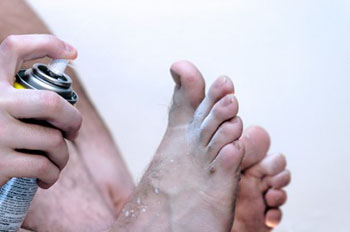
Athlete’s foot is a fairly common, contagious condition that is caused by a fungal infection. The infection thrives in warm, moist environments, such as the inside of a shoe. It’s very common for athlete’s foot to develop in between the toes. Some key signs that you may be experiencing this condition include a burning, stinging, or itching sensation, as well as redness and flaking.
Athlete’s foot may spread by direct skin to skin contact, as well as by indirect contact, such as walking barefoot on a surface where the fungus lies. Environments such as locker rooms and communal showers are popular areas where athlete’s foot is known to spread. In order to better prevent yourself from catching athlete’s foot, it’s advised to take certain precautions. These precautions can include washing your feet often and drying them thoroughly, wearing clean cotton socks, washing your towels regularly, making sure you change your shoes and socks regularly, and avoiding walking around barefoot in public areas. It’s also advised to refrain from sharing footwear and to take footwear off as soon as possible after exercising.
Because athlete's foot is best treated promptly, we recommend you consult with a podiatrist as soon as possible for a proper diagnosis and treatment plan.
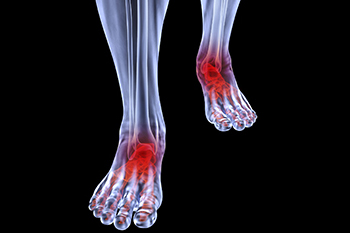
Arthritis develops when one or more joints become inflamed. When this occurs, it’s very likely for you to develop pain and stiffness in the affected area. Arthritis is typically common in the small joints of the foot as well as the ankle. It’s very possible that arthritis can develop due to previous injuries or traumas from the past. Some of the most common causes for arthritis may include old age, obesity, and genetic factors. It’s also been found that women who wear tight, high-heeled shoes for most of their lives are prone to experiencing foot complications such as arthritis.
Some signs that point to the development of arthritis include foot pain, stiffness in the joints, swelling, clicking or popping noises, as well as difficulty walking. Since arthritis can cause so much discomfort, it’s important to look into treatment methods that can help alleviate arthritic pain. One step you can take is to invest in comfortable footwear that provides you with optimal support. Shoes with arch support, heel cups, cushioning, and shock absorption are likely to provide you with ultimate comfort while you perform your day to day activities. Your doctor may also advise you to set a weight loss goal if you happen to be obese. Losing weight may help you lessen the pressure that’s being put on your feet. Heat and ice treatments have also been found to help with easing stiffness in the joints.
For more information about the type of arthritis you’re experiencing and how to best treat it, we recommend you consult with a podiatrist for professional care.
Connect With Us






 Rate Us