Understanding Foot Corns

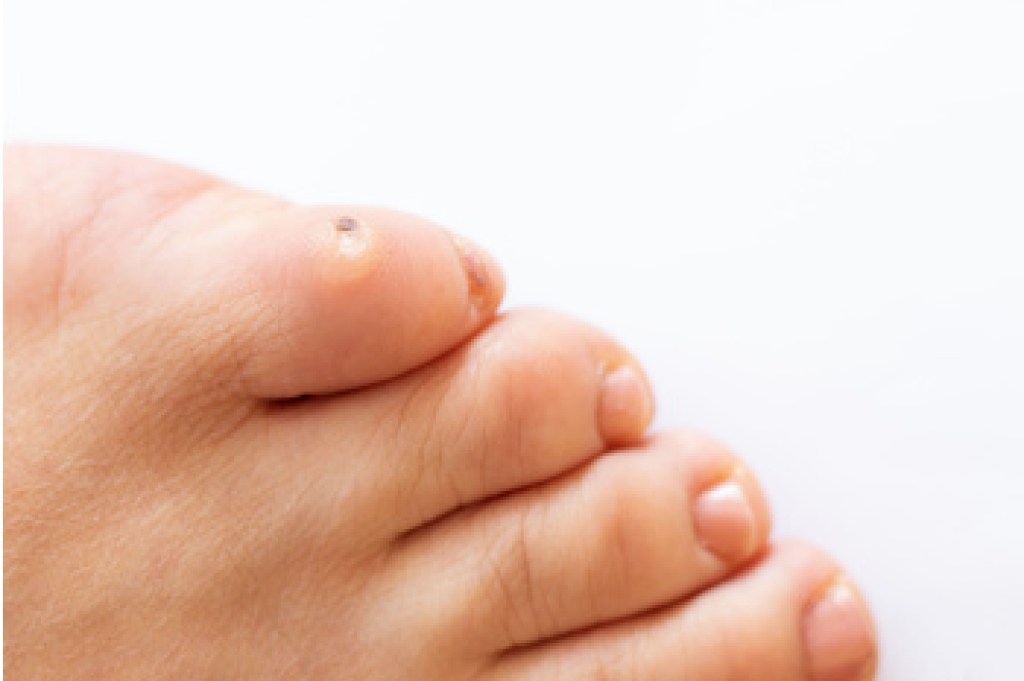
A foot corn is a thickened area of skin that develops from repeated pressure or friction. It often appears as a small, raised bump with a hardened center that can become painful when pressed. There are different types of corns. Hard corns usually form on the tops of toes or areas with constant pressure. Soft corns develop between toes where moisture is present, giving them a softer texture. Additionally, seed corns are smaller and often found on the bottom of the foot. Corns form when the skin tries to protect itself from irritation caused by wearing tight shoes, abnormal foot structure, or repeated movement. A podiatrist can safely remove corns, identify the source of pressure, and recommend solutions to prevent recurrence. Proper care helps reduce discomfort and protect skin health. Corns can be painful, and may cause difficulty in completing daily activities. If you have developed a corn, it is suggested that you consult a podiatrist who can offer effective relief solutions, which may include removal.

If you have any concerns regarding your feet and ankles, contact one of our podiatrists of Florida Foot & Ankle Group, P.A.. Our doctors will treat your foot and ankle needs.

Corns: What Are They? and How Do You Get Rid of Them?
Corns can be described as areas of the skin that have thickened to the point of becoming painful or irritating. They are often layers and layers of the skin that have become dry and rough, and are normally smaller than calluses.

Ways to Prevent Corns
There are many ways to get rid of painful corns such as wearing:

  • Well-fitting socks
  • Comfortable shoes that are not tight around your foot
  • Shoes that offer support

Treating Corns
Treatment of corns involves removing the dead skin that has built up in the specific area of the foot. Consult with Our doctors to determine the best treatment option for your case of corns.

If you have any questions, please feel free to contact one of our offices located in Debary, Lake Mary, and Orlando, FL . We offer the newest diagnostic and treatment technologies for all your foot care needs.

Read more about Understanding Corns and Calluses

When Gout Strikes the Big Toe

Gout is a form of inflammatory arthritis that often affects the big toe, causing sudden and intense pain. It may appear with redness, swelling, warmth, and extreme tenderness, sometimes making it difficult to walk or even touch the area. This condition develops when uric acid builds up in the blood and forms sharp crystals within the joint. The big toe is commonly affected because it is under frequent stress and has lower temperatures that allow crystals to form more easily. Risk factors include diet, genetics, weight, and certain medical conditions. A podiatrist can diagnose gout through examination and testing, then guide treatment to reduce inflammation and protect joint function. Early care can help prevent repeated attacks and joint damage. If you have symptoms of gout, it is suggested that you promptly consult a podiatrist who can help you to manage this painful condition.

Gout is a painful condition that can be treated. If you are seeking treatment, contact one of our podiatrists from Florida Foot & Ankle Group, P.A.. Our doctors will treat your foot and ankle needs.

What Is Gout?

Gout is a form of arthritis that is characterized by sudden, severe attacks of pain, redness, and tenderness in the joints. The condition usually affects the joint at the base of the big toe. A gout attack can occur at any random time, such as the middle of the night while you are asleep.

Symptoms

  • Intense Joint Pain - Usually around the large joint of your big toe, and it most severe within the first four to twelve hours
  • Lingering Discomfort - Joint discomfort may last from a few days to a few weeks
  • Inflammation and Redness -Affected joints may become swollen, tender, warm and red
  • Limited Range of Motion - May experience a decrease in joint mobility

Risk Factors

  • Genetics - If family members have gout, you’re more likely to have it
  • Medications - Diuretic medications can raise uric acid levels
  • Gender/Age - Gout is more common in men until the age of 60. It is believed that estrogen protects women until that point
  • Diet - Eating red meat and shellfish increases your risk
  • Alcohol - Having more than two alcoholic drinks per day increases your risk
  • Obesity - Obese people are at a higher risk for gout

Prior to visiting your podiatrist to receive treatment for gout, there are a few things you should do beforehand. If you have gout you should write down your symptoms--including when they started and how often you experience them, important medical information you may have, and any questions you may have. Writing down these three things will help your podiatrist in assessing your specific situation so that he or she may provide the best route of treatment for you.

If you have any questions, please feel free to contact one of our offices located in Debary, Lake Mary, and Orlando, FL . We offer the newest diagnostic and treatment technologies for all your foot care needs.

Read more about Everything You Need to Know About Gout

Gout Pain Can Be Managed

Gout is a painful, inflammatory form of arthritis. Those affected will typically feel an intense stiffness in the joints of their feet, particularly in the big toe. Schedule a visit to learn about how gout can be managed and treated.

Does My Child Have A Broken Toe?

If your child has stubbed their toe and you notice he or she is limping, it may be an indication of a broken toe. Some of the symptoms that are often associated with this condition may include severe pain, swelling, and the inability to put weight on the toe. After a proper diagnosis, which generally includes having an X-ray taken, proper treatment can begin. This can consist of taping the affected toe to the toe next to it, which is referred to as buddy taping. This method can give the fractured toe the stability that is needed as the healing process takes place. If the fracture is severe, it may be necessary to use a cane or crutches, which can help lessen the weight placed on the toe. If you think your child may have broken their toe, it is advised that you schedule a consultation with a podiatrist who can properly treat this condition.

A broken toe can be very painful and lead to complications if not properly fixed. If you have any concerns about your feet, contact one of our podiatrists from Florida Foot & Ankle Group, P.A.. Our doctors will treat your foot and ankle needs.

What to Know About a Broken Toe

Although most people try to avoid foot trauma such as banging, stubbing, or dropping heavy objects on their feet, the unfortunate fact is that it is a common occurrence. Given the fact that toes are positioned in front of the feet, they typically sustain the brunt of such trauma. When trauma occurs to a toe, the result can be a painful break (fracture).

Symptoms of a Broken Toe

  • Throbbing pain
  • Swelling
  • Bruising on the skin and toenail
  • The inability to move the toe
  • Toe appears crooked or disfigured
  • Tingling or numbness in the toe

Generally, it is best to stay off of the injured toe with the affected foot elevated.

Severe toe fractures may be treated with a splint, cast, and in some cases, minor surgery. Due to its position and the pressure it endures with daily activity, future complications can occur if the big toe is not properly treated.

If you have any questions, please feel free to contact one of our offices located in Debary, Lake Mary, and Orlando, FL . We offer the newest diagnostic and treatment technologies for all your foot care needs.

Read more about What to Know About a Broken Toe

Connect With Us

scroll to top